The following corrections to the book should be noted.
|
| Page 50 |
Lindernia sp. Bribie Island – The photo and description are incorrect, and are for an exotic weed species,
Lindernia rotundifolia.
Replace with the following:
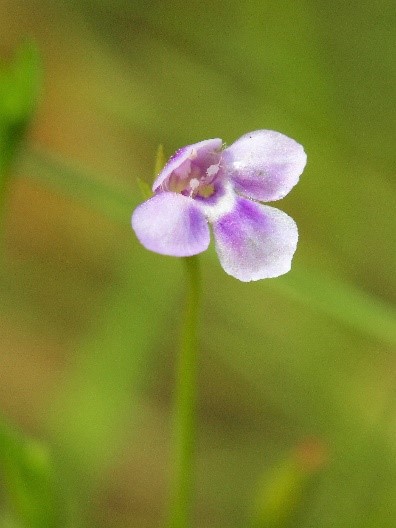
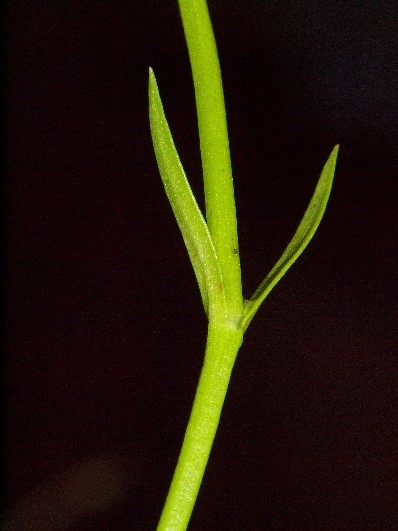
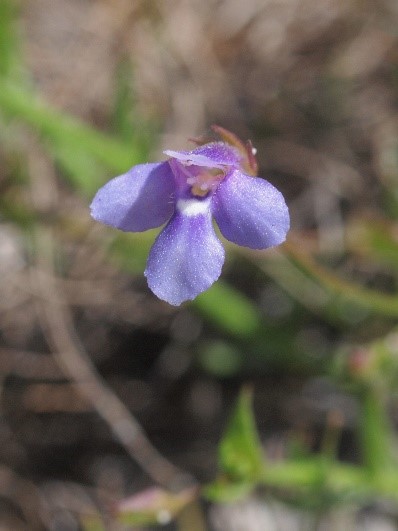
Lindernia yarun (Wallum Lindernia)
Family: Linderniaceae
Very uncommon herbaceous semi-prostrate plant to 30cm in poorly drained areas on Sunshine Coast. Opposite sessile leaves to 19mm x 3mm, lacking toothed margins. Mauve flowers to 9mm, on stalks to 55mm, with 3-lobed lower lip bent down, throughout the year. Previously Lindernia sp. Bribie Island. See similar L. procumbens, p. 161. (Photos below, left to right, pale flower and leaves photos by Bruce Wannan, and darker flower photo by Lui Weber
|
| Page 51 |
Torenia crustacea – add “Sunshine Coast north.”
|
| Page 58 |
Nymphaea gigantea – Delete the last sentence in the description about there being a “lone population … etc” and replace with “A few small populations exist in the region such as near Gatton, the Boonah district, Harrisville, and near Caboolture.”
|
| Page 66 |
Carex appress – add “Also found at higher altitudes in damp areas.”
|
| Page 131 |
Melichrus sp. Isla Gorge – where the description refers to “pinkish” flowers, change this to “pinkish or whitish”
|
| Page 142 |
Knoxia sumatrensis – add to description “Common further north of the region.”
|
| Page 161 |
Lindernia alsinoides – the photo shown is of an exotic weed species, Lindernia rotundifolia and Lindernia alsinoides is no longer considered a species of the region.
Replace with the following:
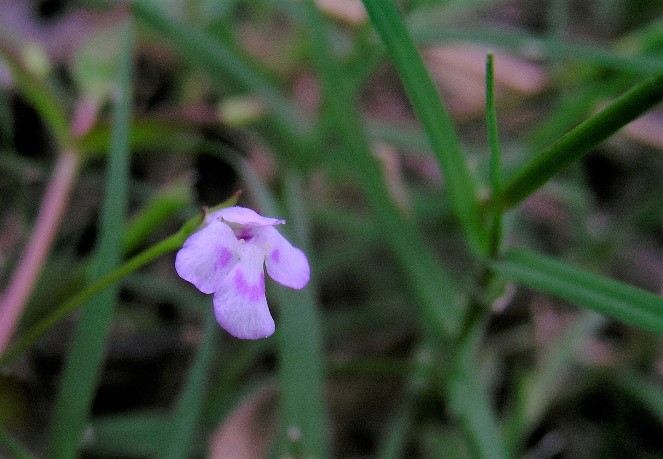
Lindernia procumbens (Creeping Lindernia)
Family: Linderniaceae
Uncommon annual herbaceous plant to 25cm tall, with mainly prostrate stems, of poorly drained areas, especially further west. Stems often red-purplish. Opposite sessile leaves to 25mm x 12mm, sometimes with blunt teeth, with 3-5 longitudinal veins, often purplish underneath. Solitary mauve, pale pink or white 10mm flowers, with 3-lobed lower lip bent downwards, on stalks to 35mm, throughout the year. See similar Lindernia yarun, p. 50. (Photos below, left to right, mauve flower photo by Brian & Sue Phillips, paler flower and leaves photos by Craig Eddie)
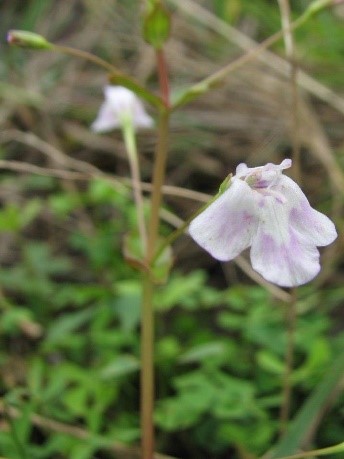
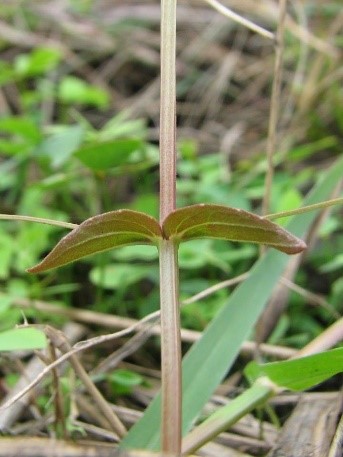
|
| Page 178 |
Myrsine arenaria – add to description – The endangered similar Myrsine serpenticola (Serpentinite Muttonwood), has been recorded from the Rainbow Beach district on coastal sandy soil, and further north.
|
| Page 196 |
Thesium australe – 2nd last line, instead of describing the flowers as “tiny” change it to 4mm.
|
| Page 219 |
Acacia granitica – add that the phyllodes are flattened, not terete.
|
| Page 251 |
Lomandra phillipsiorum – leaf width is 3mm not 3cm.
|
| Page 356 |
Psydrax odorata subsp. buxifolia – change the name to Psydrax odorata forma buxifolia.
|
| Page 441 |
Acianthus saxatilis – 3rd line of description, change “purplish/reddish” to “greyish”.
|
|
| Page 295 |
Hypserpa decumbens – the common name should be Southern Hypserpa.
|
| Page 374 |
Teucrium junceum – the common name should be Square-stemmed Broom.
|
| Page 465 |
Veronica derwentiana subsp. derwentiana – last line of description, the former name should be Derwentia derwentiana subsp. derwentiana.
|
| Page 528 |
Eucalyptus siderophloia – the common name should be Grey Ironbark.
|
| Page 545 |
Syncarpia verecunda – description of the flowers - replace "(above)" with "(right)".
|
